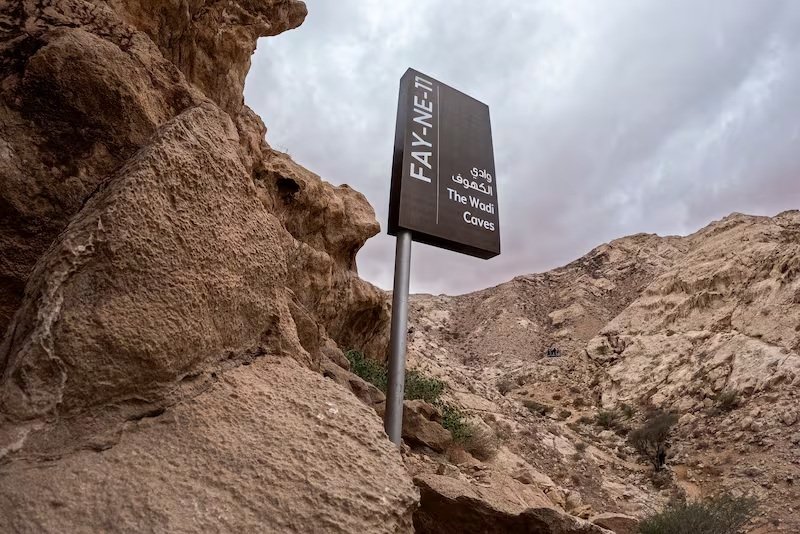
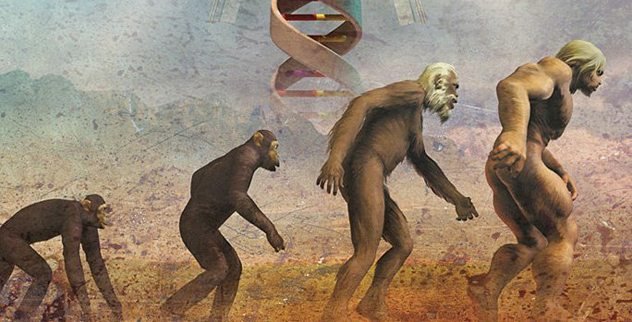
New discoveries are reshaping our understanding of early human migration. While we once believed Homo sapiens simply moved north out of Africa and spread across Eurasia, new archaeological evidence paints a more complex picture. In Sharjah’s Jebel Faya rock shelter, researchers have uncovered stone tools around 80,000 years old—the oldest known Middle Paleolithic collection in the region. This positions the UAE as a major crossroads in early human expansion and extends evidence of human presence on the Arabian Peninsula back 210,000 years.
The findings, published in the peer-reviewed journal *Archaeological and Anthropological Sciences* by Springer Nature, are part of an international research project led by the Sharjah Archaeology Authority, working with the University of Tübingen, the University of Freiburg, and Oxford Brookes University. Support also came from the German Research Foundation and the Heidelberg Academy of Sciences.
The wider Faya Palaeolandscape has long been seen as a key passage in early migrations, but the latest study shows it was more than a stopover. During favourable periods—especially the Marine Isotope Stage 5a around 80,000 years ago—it offered a sustainable habitat where early humans could settle, thrive, and adapt.