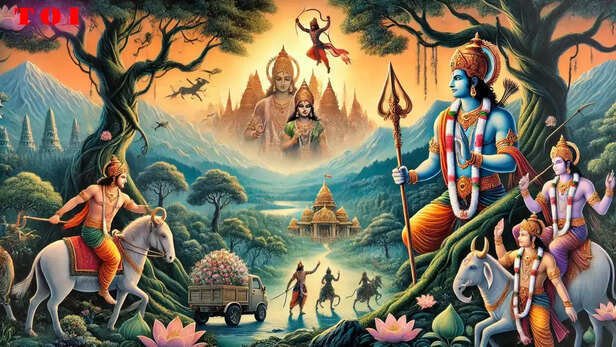
Time Travel in the Ramayan: The Ancient Epic That May Have Predicted Quantum Physics
Time travel — a concept that has fascinated humanity for centuries — fills the pages of science fiction, blockbuster films, and futuristic theories. But what if the idea of leaping through time wasn’t just born in modern imagination? What if it’s hidden in one of the world’s oldest epics — the Ramayan?
Beyond flying chariots, divine wars, and moral lessons, this ancient text may hold cryptic clues about time manipulation, parallel realities, and consciousness beyond dimensions. Could Ramayan be the earliest story about time travel ever told? Let’s explore the evidence.
Revisiting the Ramayan — A New Lens on an Ancient Epic
Attributed to Sage Valmiki, the Ramayan recounts the journey of Lord Rama, whose wife Sita is abducted by the demon king Ravana — leading to an epic battle of good versus evil.
But beneath its spiritual surface, the text hides profound symbols and cosmic insights that align curiously with modern physics and temporal theory.
Kakbhushundi: The Time Witness of the Universe
The most mysterious figure is Sage Kakbhushundi, who took the form of a crow. In Ramcharitmanas, he claims to have seen Rama’s life unfold across multiple yugas (epochs) — witnessing countless cosmic cycles of creation and destruction.
How can one being observe events that recur across different ages? Could this reflect time loops, reincarnated awareness, or a form of consciousness that transcends linear time?
Kakbhushundi seems like an ancient chrononaut — a traveler beyond the limits of time.
Pushpak Vimana — Ravana’s Time-Bending Aircraft
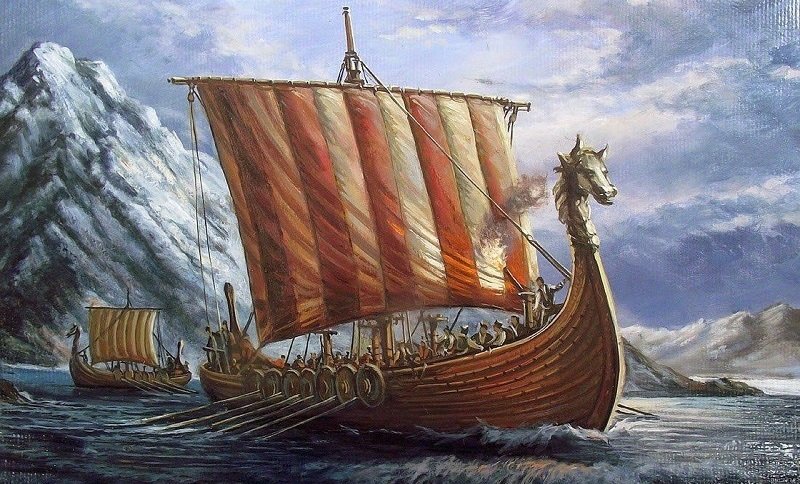
Ravana’s Pushpak Vimana is usually described as a flying chariot, but some ancient references suggest it could traverse both space and time.
Certain texts note that passengers on the Vimana experienced short journeys, yet when they returned, years had passed on Earth — a poetic echo of Einstein’s time dilation.
When Rama, Sita, and Lakshman returned to Ayodhya, the shift in time barely gets addressed. Could their journey have involved subtle distortions in time-space?
The Pushpak might not just be an aircraft—it could symbolize an early understanding of relativity.
Ashwatthama’s Curse — Immortality or a Time Loop?
Ashwatthama, cursed to wander until the end of time, exists beyond human chronology. What if he’s trapped in a time loop—living outside the normal flow of history?
Like Kakbhushundi, he may represent the idea of consciousness detached from time—a being aware across infinite temporal cycles.
The 14-Year Exile — A Forest Outside Time
Rama’s vanvas (forest exile) lasted 14 years, but in many retellings, time in the forest feels stretched or suspended.
In Vedic symbolism, forests often represent realms between worlds—portals where normal time doesn’t apply. Could the vanvas have occurred in a different temporal dimension?
Mandodari’s Lament — The Collapse of a Time-Bubble Civilization
After Ravana’s fall, Mandodari mourns not just her husband but a vanished empire — Lanka destroyed “in the blink of an eye.”
If Ravana mastered time-altering technology, perhaps Lanka existed in a warped time field, much like the mythical lost cities of Atlantis or Shambhala. Its destruction might represent a time-bubble collapsing into linear reality.
Hanuman — The Ancient Astronaut of Time
Hanuman’s leaps across space — to the Sun, to Lanka, to the Himalayas — seem to defy physical limits. Some interpretations suggest these aren’t just feats of strength but symbolic of time folding.
As the devotee of Surya, the Sun God (a symbol of time), Hanuman could represent mastery over time itself — able to compress or expand moments at will.

Rebirth and Recurrence — The Cosmic Time Loop
Hindu cosmology is cyclical — worlds rise and fall, souls reincarnate, and even divine avatars return in new forms.
Rama reappears as Krishna. Ravana returns as Shishupala. These recursions mirror parallel timelines or eternal returns — the same story replayed across universes until karmic resolution.
Time as a Living Force
In the Ramayan, time isn’t passive. It directs destiny, aligns the stars, and determines divine timing — from Rama’s birth to his victory.
Perhaps Time itself is the hidden deity of the epic — shaping every event with mathematical precision.
The Hidden Message
What if the Ramayan encodes ancient insights about the fabric of reality — where time, consciousness, and energy intertwine?
Maybe Valmiki wasn’t just composing myth — he was preserving quantum wisdom through story, long before science caught up.
So maybe time travel isn’t just about machines or wormholes after all. Look back at the Ramayan — and you might find that humanity’s first tale of time travel was written thousands of years ago, disguised as divine poetry.