There is strong evidence of a huge ocean imprisoned 400 miles below the surface of the Earth’s mantle, according to a ground-breaking study. This secret water reserve, which is contained in the uncommon mineral ringwoodite, contradicts earlier theories regarding the planet’s water content. According to current scientific theories, the Earth’s interior is home to more water than all of the planet’s surface oceans combined, trapped inside mantle rocks by intense heat and pressure.
Evidence of Deep Melting Linked to Water Release
Brandon Schmandt, an author, pointed out the unusual melting of mantle rock at such great depths: “Melting of rock at this depth is remarkable because most melting in the mantle occurs much shallower, in the upper 50 miles.”
He added, “If there is a substantial amount of H2O in the transition zone, then some melting should take place in areas where there is flow into the lower mantle, and that is consistent with what we found.” This melting is driven by the release of water from ringwoodite as it changes form under intense pressure. Jacobsen noted, “Whether or not this unique sample is representative of the Earth’s interior composition is not known, however. Now we have found evidence for extensive melting beneath North America at the same depths corresponding to the dehydration of ringwoodite, which is exactly what has been happening in my experiments.”
Seismic Verification of Subduction and Mantle Melting Mechanisms
Scientists were able to better understand the Earth’s underlying structure by using seismic data from the USArray network located throughout North America. “We are gaining a better understanding than ever before of the Earth’s internal structure beneath North America thanks to seismic data from the USArray,” Schmandt added.
Subduction, or the downwelling of mantle material from the surface, seems to be the primary cause of the melting that we observe. The hypothesis that water influences deep mantle convection and tectonic motions is supported by the fact that this subduction-related melting coincides with the water release from ringwoodite.
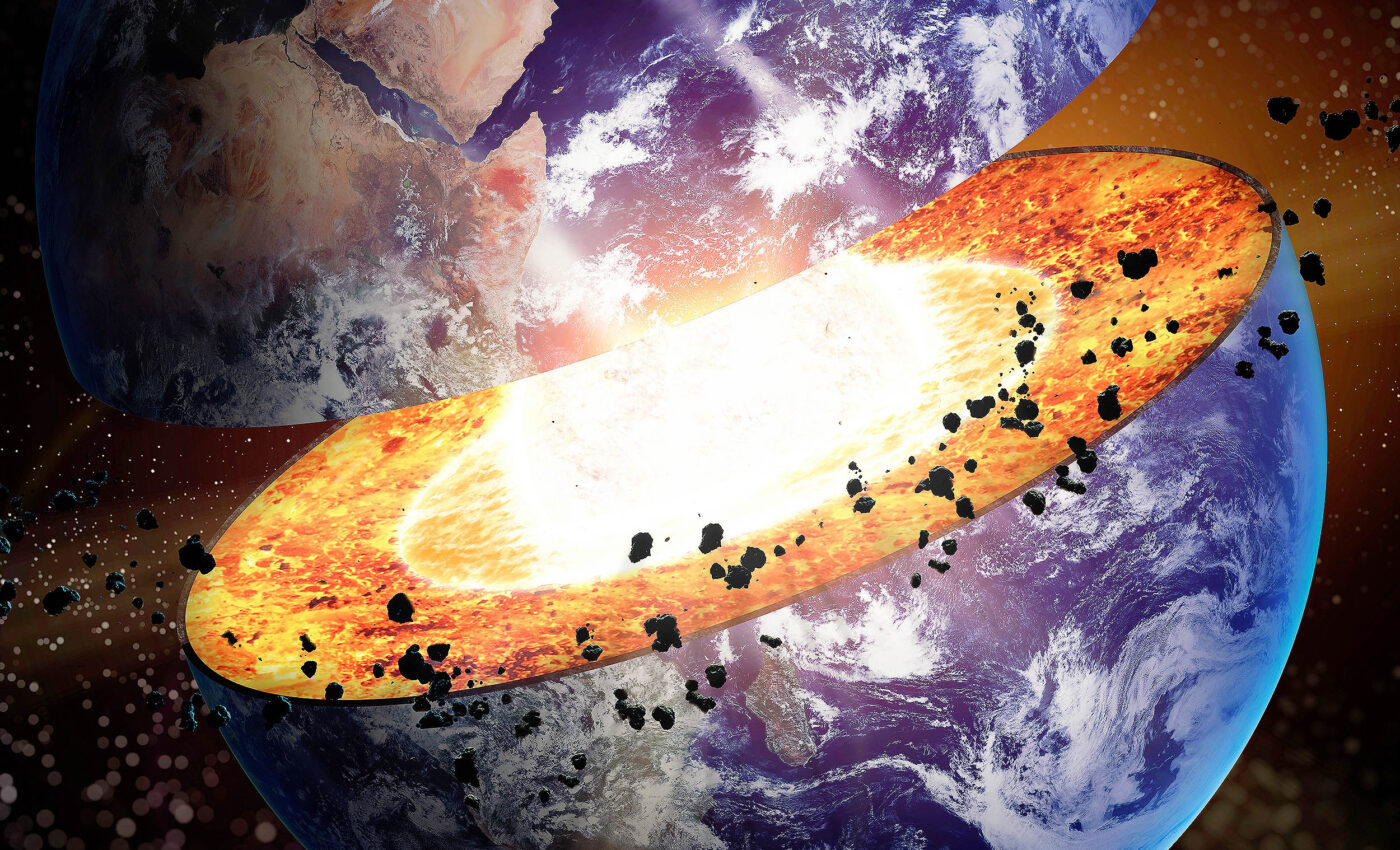
The vast interior ocean, 400-miles under our feet, that creates ‘Ringwoodite’ gems
Ringwoodite, a high-pressure mineral that originates in the Earth’s mantle between 250 and 410 miles underground, is the subject of the discovery. The capacity of ringwoodite to retain water molecules inside its crystal structure is what distinguishes it. “Geological processes on the Earth’s surface, such as earthquakes or erupting volcanoes, are an expression of what is going on inside the Earth, out of our sight,” noted research co-author Steve Jacobsen.
He continued, “I think we are finally seeing evidence for a whole-Earth water cycle, which may help explain the vast amount of liquid water on the surface of our habitable planet. Scientists have been looking for this missing deep water for decades.” This finding suggests a continuous water cycle not just on the surface but through the entire Earth.
Unique Properties of Ringwoodite and Its Water Storage Capacity
Ringwoodite’s ability to hold water is extraordinary. Jacobsen remarked, “There is something very special about the crystal structure of ringwoodite that allows it to attract hydrogen and trap water. This mineral can contain a lot of water under conditions of the deep mantle.”
Ringwoodite can retain more than 1% of its weight in water, bound as hydroxyl radicals inside its crystal matrix, according to lab tests that mimic mantle conditions. By altering the physical and chemical behavior of mantle rock, this trapped water reservoir has an impact on numerous geological processes.