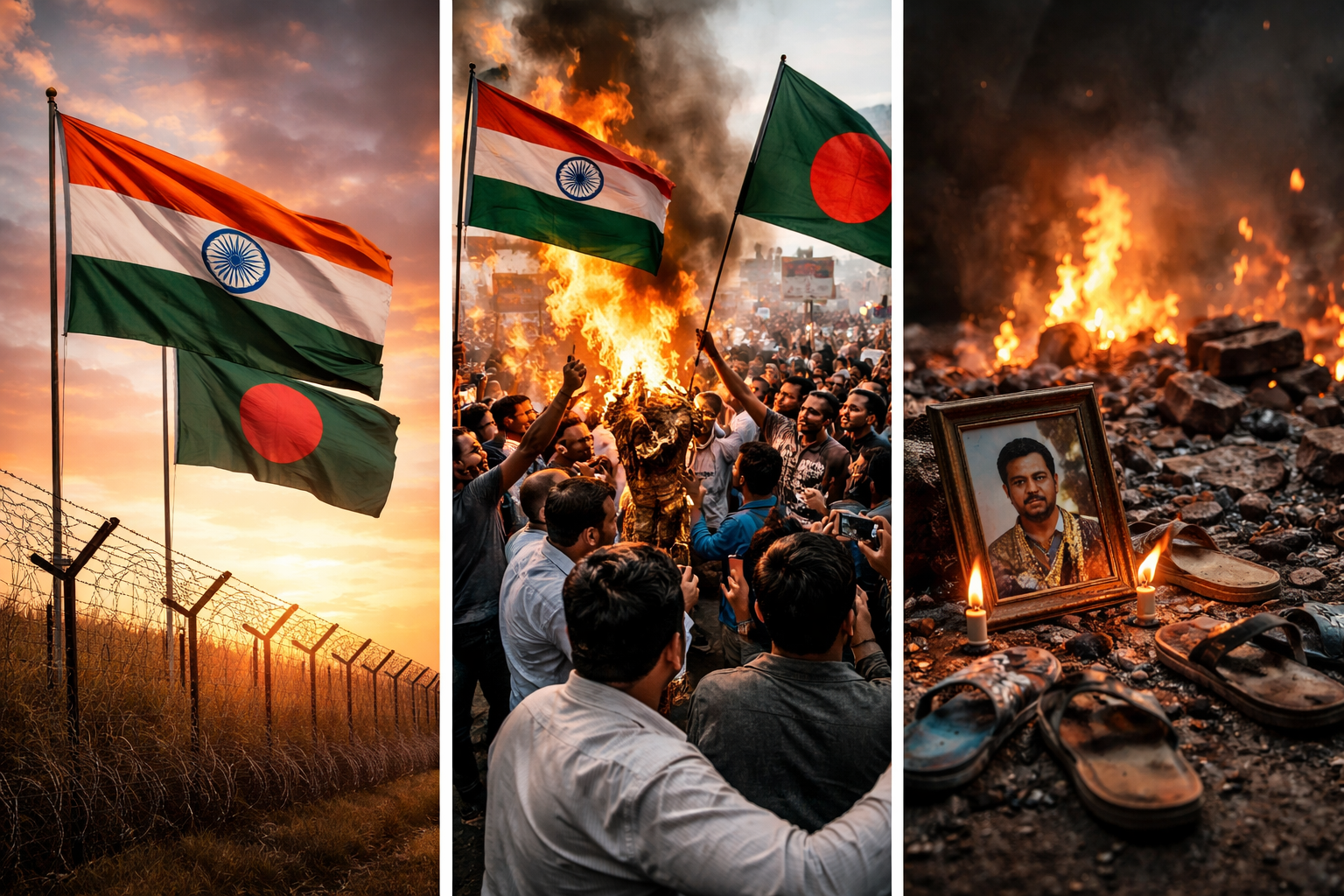
India and Bangladesh share more than just a border. Language, culture, rivers, memories of struggle, and decades of cooperation bind the two nations together. Yet, despite this deep-rooted connection, relations between the neighbours have increasingly found themselves caught in waves of controversy—political, social, and strategic.
To understand why tensions flare up from time to time, it is essential to look not only at the present but also at the long and complex history that shaped the relationship.
A Relationship Born Out of Blood and Solidarity
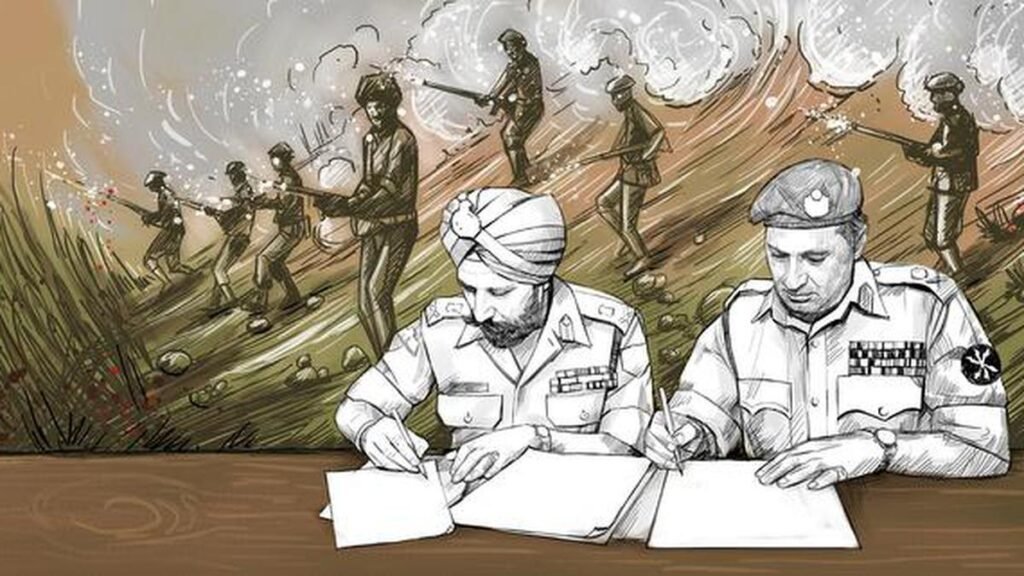
Bangladesh’s very birth in 1971 is inseparable from India. During the Bangladesh Liberation War, India supported the Mukti Bahini and hosted millions of refugees fleeing violence in then–East Pakistan. India’s military intervention played a decisive role in the creation of an independent Bangladesh.
This shared history created a foundation of goodwill. For years, India was seen as Bangladesh’s closest ally, and cooperation expanded across trade, security, education, and culture.
However, history also left behind unresolved issues—especially borders, migration, and water sharing—that would later become sources of friction.
The Border Question and Illegal Migration Debate
One of the most sensitive and recurring controversies between India and Bangladesh revolves around illegal migration.
Indian states like Assam and West Bengal have long claimed that undocumented migrants from Bangladesh have altered demographics, strained resources, and influenced local politics. In response, Bangladesh has consistently denied these allegations, stating that India exaggerates the issue and unfairly labels Bengali-speaking Indian citizens as foreigners.
The National Register of Citizens (NRC) and the Citizenship Amendment Act (CAA) in India further complicated matters. While India views these as internal legal processes, Bangladesh has expressed concern over rhetoric that implies large-scale migration from its territory, calling such claims politically motivated and diplomatically insensitive.
Water Sharing: Rivers That Unite and Divide
Over 50 rivers flow between India and Bangladesh, making water-sharing a critical issue.
The Ganga Water Treaty of 1996 is often cited as a successful example of cooperation. However, disputes over rivers like the Teesta remain unresolved. Bangladesh considers Teesta water sharing vital for its northern regions, while political disagreements within India—particularly involving state governments—have stalled progress.
Each dry season, the issue resurfaces, reminding both nations that geography can be both a blessing and a burden.
Political Rhetoric and Diplomatic Discomfort
In recent years, statements by political leaders, media narratives, and social media discourse have added fuel to controversies.
Comments portraying Bangladesh as economically or politically dependent on India have sparked backlash across the border. Similarly, concerns in Bangladesh about India’s growing regional influence and perceived interference in domestic matters have led to public unease.
While official diplomatic channels remain largely stable, public perception has grown more fragile.
Security, China, and Strategic Anxiety
Another layer of complexity is geopolitics.
India has traditionally viewed Bangladesh as a crucial partner in maintaining stability in its eastern region. Bangladesh’s growing economic and infrastructure ties with China—especially under the Belt and Road Initiative—have raised quiet concerns in New Delhi.
Bangladesh, on the other hand, insists on a balanced foreign policy and rejects the idea that stronger ties with China are aimed against India.
This strategic triangle has made the relationship more cautious, if not confrontational.
Trade, Transit, and Cooperation: The Other Side of the Story
Despite controversies, cooperation continues to grow.
India is one of Bangladesh’s largest trading partners. Transit agreements have improved connectivity in India’s Northeast, while Bangladesh benefits from power-sharing projects, investments, and access to Indian markets.
Joint efforts on counter-terrorism, border security, and disaster management show that pragmatic cooperation often outweighs political noise.
Political Rhetoric and Rising Tensions
In recent months, political and public rhetoric has increasingly spilled into the diplomatic sphere:
- Some Indian politicians criticised Bollywood icon Shah Rukh Khan over the inclusion of Bangladeshi cricketer Mustafizur Rahman in the Indian Premier League (IPL), linking sports to nationalist narratives and stirring public debate.
- Bangladesh leaders have pushed back against assertions that India influences its domestic affairs, with renewed calls for respect and balanced diplomacy.
Meanwhile, discussions about closer ties between Bangladesh and Pakistan, including defense cooperation, have become a talking point in Indian strategic circles, adding another layer of geopolitical complexity.
Violence and Its Ripple Effects
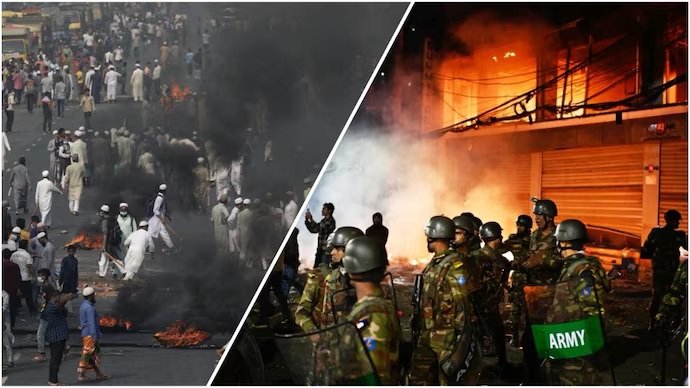
Perhaps the most sensitive and impactful controversies involve recent episodes of mob violence and killings in Bangladesh, especially those targeting religious minorities. These events have stirred emotional responses in India and have become a flashpoint in public discourse.
A Hindu man was brutally attacked in Mymensingh, Bangladesh; his body was tied to a tree and set on fire in what local media described as a violent mob action linked to blasphemy allegations. This garnered widespread outrage and condemnation.
Reports also emerged of another mob attack where a Hindu businessman was set on fire, leaving him critically injured.
In Pirojpur, houses were locked and torched by groups in communal clashes, raising serious concerns about civilian safety.
📣 Public Outcry
These incidents have not remained confined within Bangladesh’s borders. In New Delhi, hundreds took to the streets to protest the killing of a Hindu man, reflecting how such events influence public opinion and stir bilateral sensitivities.
The Indian government has also publicly condemned killings of minority individuals in Bangladesh, highlighting that such violence cannot be brushed aside and deserves serious attention in diplomatic conversations.The India–Bangladesh relationship is a story of shared history, evolving aspirations, and real challenges. It reminds us that international relations are never just diplomatic protocols — they are woven deeply into culture, politics, and the everyday lives of millions.
As both countries navigate controversies and crises, the hope remains that mutual respect, dialogue, and empathy will guide the relationship forward — beyond headlines and into a future that honours their intertwined past.