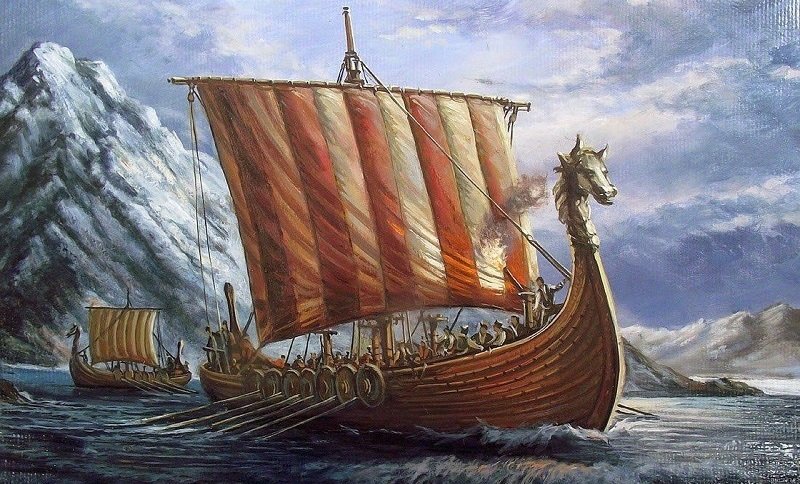
25 Viking ships sailed from Iceland in 985 to settle in Greenland, according to Icelandic sagas. According to Historienet, their family resided there for generations before abruptly vanishing in the 1400s.
For years, historians have argued over the reasons behind the colony’s demise. According to recent studies, a confluence of unfavorable events contributed to their demise. Sediment analysis from Greenland’s fjords reveals that temperatures fell precipitously around 1250.
Sailing became challenging due to the freezing fjords created by the cold. The summers also got a lot windier. It was more difficult to survive in these hostile conditions.
To survive the lengthy winters, people required larger food stores and more firewood. The colony got harder and harder to maintain.
The settlers also lost one of their primary revenue streams at the same time. European consumers began purchasing elephant ivory instead of Greenlandic walrus ivory.
As a result, Greenland saw a decrease in the number of commerce ships. The settlers were more cut off from the outside world as trade declined.
It appears that the evacuation from Greenland occurred gradually. The number of young people has decreased, according to skeletons found at graveyards.

This implies that many of them departed first. Since there were better chances to acquire land in Iceland or Norway, they probably went there.
In the 1300s, Europe was ravaged by the Black Death, leaving behind open space and deserted fields.
The abrupt and brutal termination of the Greenlandic Norse colonies is not supported by any evidence. Rather, it seems like the individuals gradually departed in tiny groups.
Life was likely too tough due to the isolation, economic hardships, and deteriorating climate.
Given these difficulties, the settlers probably left their homes in quest of a fresh future because they believed there were better opportunities abroad.